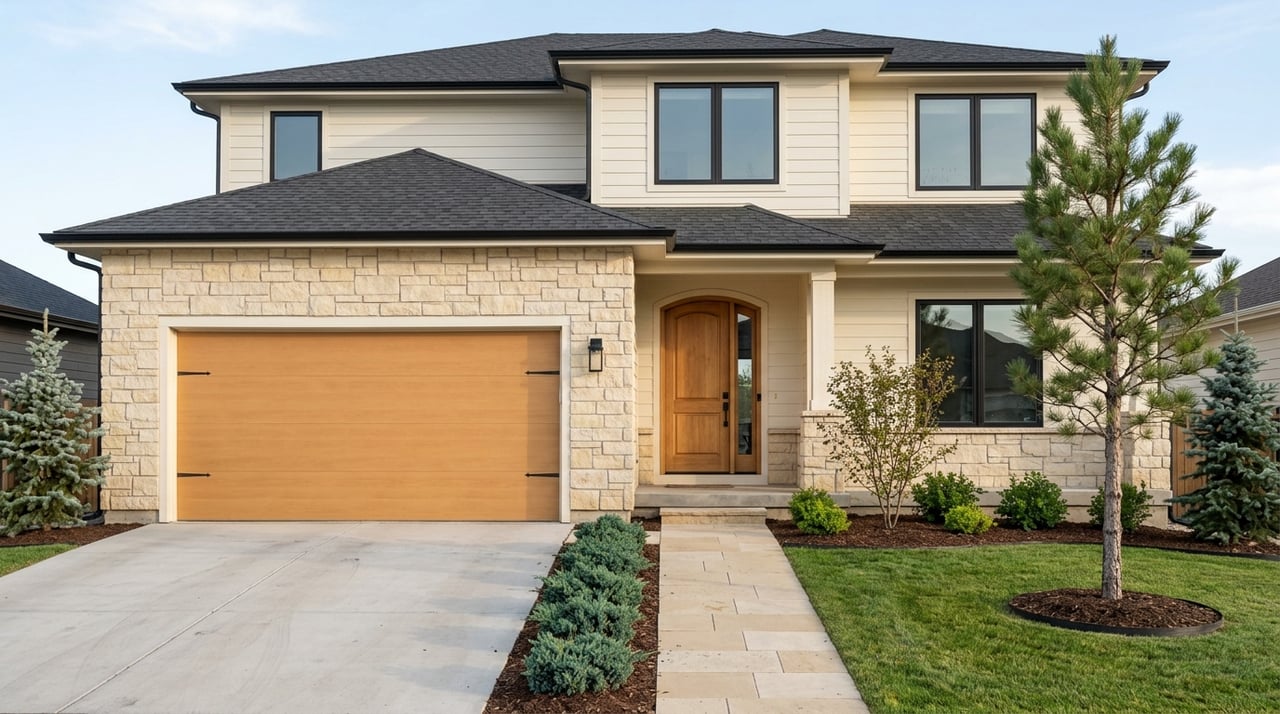
How First-Time Buyers Can Choose the Right Aurora Home
June 4, 2026
June 4, 2026
June 4, 2026
Buying your first home in Aurora can feel exciting right up until you realize how many moving pieces are involved. Prices, home types, commute options, school district boundaries, HOA rules, and monthly costs can all change from one part of Aurora to another. The good news is that with the right plan, you can narrow your search with confidence and avoid costly surprises. Let’s dive in.
One of the biggest mistakes first-time buyers make is shopping by list price alone. In Aurora, public market data places home prices in the mid-$400,000s overall, but that citywide number only tells part of the story.
Aurora condos have a median list price around $250,000, while townhomes sit around $379,000. Public neighborhood snapshots also vary quite a bit, from about $287,000 in Heather Gardens to $525,000 in Murphy Creek, with places like Summer Valley and Meadow Hills landing somewhere in between. That means your budget may open up very different options depending on the home type and area you choose.
Before you tour homes, focus on the monthly payment you can comfortably handle. That includes more than principal and interest. You also want to account for property taxes, insurance, HOA dues if applicable, and any metro district taxes that may affect your total payment.
Aurora is a large city with more than 414,000 residents spread across more than 165 square miles and parts of Adams, Arapahoe, and Douglas counties. Because of that size, one citywide average does not reflect every neighborhood, commute pattern, or housing option.
Public reports also use different methods, which is why Aurora can look slightly different depending on the source. A smart approach is to treat market stats as directional and compare like with like, meaning the same property type, same area, and same data points.
For many first-time buyers, the best starting point is not the neighborhood. It is the home type. In Aurora, that choice can have a major impact on affordability, maintenance, and lifestyle.
Condos are often the lowest-price path into the market. Townhomes usually offer a middle ground between price and space. Detached homes may give you more privacy and control, but they often come with a higher price point than attached housing.
Ask yourself what matters most in your daily life. If keeping your entry cost lower is the top goal, a condo may be worth a close look. If you want a bit more room without jumping to a detached home price, a townhome may fit better.
If you care most about fewer shared walls, more yard space, or more control over the property, a detached home may be the right long-term fit. The tradeoff is usually a higher purchase price and more maintenance responsibility.
New construction can be appealing, especially if you want modern finishes and less immediate repair work. In Aurora, public home-feature data shows that new construction is among the more valuable listing features.
That makes new builds a lifestyle choice worth considering, but not always the most affordable option for a first-time buyer. If your budget is tight, it helps to compare new construction carefully against resale condos, townhomes, and detached homes in the same general area.
A home can look perfect online and still be the wrong fit for your routine. In Aurora, location decisions carry extra weight because the city is so large and includes more than 450 neighborhoods.
That means your experience can vary widely depending on where you buy. The right first home is not just about square footage or finishes. It is also about how the location supports your day-to-day life.
Commute time in Aurora is highly neighborhood-specific. Some buyers want quick access to major roads, while others want transit options that make daily travel easier.
RTD bus service runs throughout Aurora. The A Line has two Aurora stops and connects Denver Union Station to Denver International Airport, while the R Line runs through the heart of Aurora with connections to the airport, the Denver Tech Center, and downtown Denver. The East Colfax BRT project is also under construction, with work starting in Aurora in May 2026.
If your schedule depends on a smooth commute, use that as an early search filter. A slightly smaller home in a better location for your routine may feel like the stronger choice over time.
School district boundaries are another important filter, even if you are not focused on schools today. Different parts of Aurora are served by Aurora Public Schools, Cherry Creek School District, Brighton Public Schools, Douglas County School District, and Bennett Public Schools.
The city specifically notes that Rocking Horse and Inspiration are in Douglas County School District. If you are searching in south Aurora or near the Douglas County edge, it is especially important to confirm district boundaries early rather than assume based on an Aurora address.
The sales price matters, but the monthly cost matters more. This is where some first-time buyers get surprised, especially when comparing attached homes, newer communities, and homes in different county pockets.
A lower list price does not always mean a lower total payment. To choose the right Aurora home, you need to understand every recurring cost tied to ownership.
In Colorado, many common-interest communities are governed by declarations, bylaws, policies, and rules. The practical lesson for buyers is simple: treat HOA documents as contract terms, not as optional reading.
The Colorado HOA Center advises buyers to review assessments, common elements, restrictions, plat maps, deferred maintenance issues, questionnaire concerns, and registration status. It also recommends pulling the declaration from the county clerk even before going under contract when possible.
If you are considering a condo or townhome, this step is especially important. A lower price can still come with rules, fees, or future costs that affect whether the home truly fits your budget and lifestyle.
In some Aurora communities, you may also need to account for a metro district. Aurora describes metro districts as independent units of government that can issue bonds and impose property taxes to repay those bonds.
That matters because a home with a modest HOA fee could still carry added costs through metro district taxes. Before you make an offer, check the HOA fee, ask about special assessments, and confirm whether a metro district mill levy affects the property.
If down payment savings are your biggest hurdle, Aurora offers resources that may help. The city currently has a down payment assistance program for qualifying homes that covers 4% to 10% of the purchase price.
According to the city, that assistance is structured as a silent second loan with no monthly payments and is available to households earning up to 120% of area median income. The program is available through October 31, 2026, or until funding is exhausted.
CHFA also offers statewide first-time buyer assistance options. These include a grant of up to the lesser of $25,000 or 3% of the first mortgage with no repayment, and a second-mortgage option of up to the lesser of $25,000 or 4% with repayment deferred until sale, refinance, or payoff.
CHFA also emphasizes taking homebuyer education early in the process. That is smart advice because assistance options can affect what price range is realistic, how much cash you need to close, and which homes make sense to pursue.
Aurora city housing counselors can help buyers review budgets, credit reports, debt management, and possible down payment assistance before shopping. For a first-time buyer, that guidance can make the search feel much more manageable.
It also helps you translate a home’s list price into a realistic monthly payment. That is often the key to deciding whether a condo, townhome, or detached home is your best next step.
When you look at market data, make sure you are making fair comparisons. REcolorado notes that median is often more useful than average because very high or very low sales can skew averages.
It also explains that Days in MLS counts only the time a listing is active. Those details matter when you are trying to understand whether a home is priced reasonably or how quickly you may need to act.
In Aurora, one report may show a median sale price around $458,207 while another shows a median listing price around $445,000. Those numbers are not necessarily conflicting. They may simply reflect different methodologies, timeframes, or property sets.
The better strategy is to compare the same home type in the same area using the same metrics. If you are shopping for a townhome in a south Aurora pocket, citywide detached-home numbers will not tell you much about your actual competition.
If you want to narrow your search without getting overwhelmed, keep your process simple and practical.
The right first home in Aurora is rarely about finding a perfect house. It is about finding the right balance of payment, location, home type, and long-term comfort.
Aurora offers a wide range of entry points, from lower-priced condos to townhomes and detached homes in very different neighborhood settings. When you take a neighborhood-first, numbers-driven approach, you give yourself a much better chance of choosing a home you can truly enjoy and afford.
If you want a local guide who can help you compare Aurora neighborhoods, break down the real monthly cost, and move quickly when the right home hits the market, Kerri Dowling is here to help.
Stay up to date on the latest real estate trends.
We can't wait to connect with you! Your real estate journey starts here, where you'll have the opportunity to sit down with Kerri Dowling for a personalized consultation.