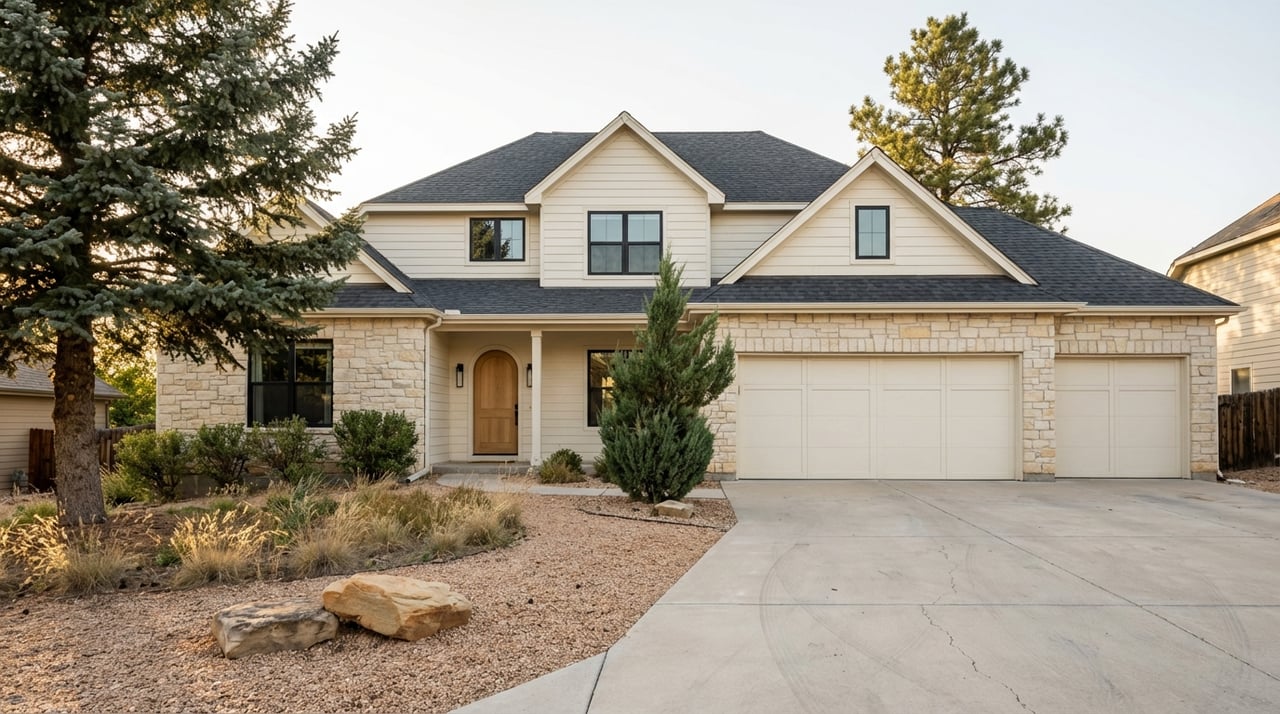
Castle Rock Move-Up Homes: Where Buyers Look
February 19, 2026
February 19, 2026
February 19, 2026
Is your current Castle Rock home starting to feel tight on bedrooms, storage, or backyard space? You are not alone. Many 80109 homeowners are ready for more room, a different floorplan, or a lifestyle shift that fits changing routines. In this guide, you will see where move-up buyers focus in Castle Rock, what you typically get for your money, how commutes and amenities vary by neighborhood, and a simple framework to compare options with confidence. Let’s dive in.
Prices and inventory in 80109 point to a selective, value-conscious market. Recent reporting places the ZIP’s median listing price near the mid- to upper-600s, with price-per-square-foot benchmarks in the low 200s. Sales-to-list ratios have hovered close to parity, which means well-priced homes tend to sell near asking.
Castle Rock residents also weigh commute time. The town’s average one-way commute is about 29 minutes, which is longer than the national average and a real factor for move-up decisions. You will feel this difference by micro-market and time of day, so commute mapping matters. See the baseline context in the town’s profile on DataUSA.
One more dynamic affects move-up shoppers: fewer owners are listing compared with prior cycles, which limits trade-up inventory even when demand is steady. Local reporting notes that many homeowners are staying put, which reduces available options in the middle and upper price bands. Get the context from Axios’ overview of the Denver metro trend.
The Meadows offers one of the widest ranges of home types in Castle Rock, from townhomes to larger single-family homes. Typical move-up options here span roughly 1,800 to 3,500+ square feet with moderate lots. Values often sit near the ZIP’s median, which makes this a high-demand, value-dense choice. You also get convenient access to Santa Fe Drive and I‑25, a strong neighborhood trail network, and multiple community parks.
Red Hawk is a go-to for buyers who want golf-course adjacency, foothill views, and larger homesites. Many floorplans top 3,000 square feet, and you will see lots around 0.16 to 0.26 acres, with premium sites trading higher. Access to I‑25 can take a few minutes longer than some west-of-I‑25 pockets, but the trade is scenery and a quieter feel.
Plum Creek includes established golf-course pockets and larger homes, often in the 2,500 to 5,000+ square foot range. Many sections feature mature landscaping and upsized lots. Certain areas are close enough to enjoy downtown access with a short drive, which appeals to buyers who want extra space without feeling far from restaurants and events.
These central neighborhoods are popular with buyers trading up from a first home who want to stay close in. Typical lots run about 0.15 to 0.20 acres. Prices often sit below newer master-planned areas, which can stretch your budget a bit further if you value central location and established streets.
If you want new construction and modern systems, Crystal Valley and the Dawson Trails area offer a range of 2,200 to 4,000+ square foot plans. A major consideration here is future access. The Crystal Valley Parkway and I‑25 interchange is under construction, with completion expected in the 2026 to 2027 window. That change should shorten ramp times for many southern neighborhoods. Stay current with the Crystal Valley interchange update.
The Town approved early phases of Dawson Trails, with residential lots already cleared. That growth will add new housing choices and future retail anchors. See the approval summary via Citizen Portal’s Dawson Trails report.
Here, the trade-off is space for walkability. Lots are compact and homes are older on average, but you are close to dining, events, and community activities. Inventory is tight, so timing and preparation matter.
You will see common patterns across 80109 and nearby micro-markets:
Start with the town’s average one-way commute of about 29 minutes, then test drive times for your specific route at typical rush hours. West and central neighborhoods with quick access to Santa Fe Drive or I‑25 usually offer shorter on-ramp times. Red Hawk and other elevated areas trade a few extra minutes for views and larger lots. Southern and eastern growth areas should gain ramp-time advantages when the Crystal Valley interchange opens.
Castle Rock is not within RTD light rail service, so most residents rely on personal vehicles. The town tracks regional options and has limited shuttle programs, but fixed rail inside Castle Rock is not a current commuter solution. For current transit context, review the Town’s transit FAQ.
Major amenities shape daily life and long-term resale. Philip S. Miller Park offers regional recreation and trail networks. The Outlets at Castle Rock provide strong retail access. The Brickyard redevelopment is another notable anchor, including the new Castle Rock Sports Center now under construction. Learn more about the project on the Town’s Castle Rock Sports Center page.
Several Castle Rock neighborhoods were built with metro districts that levy additional property tax mill rates to fund infrastructure and amenities. These levies vary widely and can materially affect your annual tax bill and monthly payment. The Town notes it collects only a small share of your total property tax for municipal services, so the metro district portion is essential to understand. Before you write an offer, review the metro district service plan, current mill levy, and HOA dues where applicable. See the Town’s guidance in the Castle Rock FAQs.
Use this checklist to evaluate neighborhoods side by side and focus your search.
Define your true space needs. List must-haves like an extra bedroom, a main-level office, a larger primary suite, or a finished basement. Separate needs from nice-to-haves.
Map commute time by neighborhood. Run morning and evening drive tests from each short-list area to your workplace. Note that the Crystal Valley interchange is scheduled for completion in the 2026 to 2027 window, which may shorten future drive times in southern neighborhoods. You can review timing in the interchange update.
Compare price per square foot with lot quality. A usable, flat yard or premium site can justify a higher price per square foot. Favor recent closed sales within the last 6 to 12 months when possible.
Evaluate recurring charges. Add property taxes, HOA dues, and any metro district mill levy to understand your monthly obligation. Confirm details through Town and district documents.
Weigh amenities and future projects. Trails, park access, and proximity to retail or recreation like the Brickyard and the Sports Center can enhance daily life and help with resale.
Decide on new-build versus resale. New construction brings modern systems and warranties, but often includes metro district costs and less mature landscaping. Resales may offer larger lots, established trees, and room to negotiate based on condition.
Plan for lower turnover. With fewer owners listing, prepare for tight inventory. If you need to sell first, consider strategies like a rent-back, coordinated closings, or financing solutions that reduce timing pressure. For a broader trend view, see the regional reporting on owners staying put.
Use these prompts to narrow your list fast:
Ready to map your short list and tour the best options? Let Kerri be your guide. Connect with Kerri Dowling to build your move-up plan in 80109.
Stay up to date on the latest real estate trends.
We can't wait to connect with you! Your real estate journey starts here, where you'll have the opportunity to sit down with Kerri Dowling for a personalized consultation.